Monday, 3 April 2017

EXCLUSIVE @CrimBarrister on the proposed introduction of pre-recorded cross-examination for “victims of rape and other sex crimes”

There are so many potential blog topics from the current febrile political climate right now, it’s hard to know where to start.

There’s the rumbling row about s41 and whether the previous sexual history of complainants in sexual offences trials should be admissible, and if so in what circumstances – check out top blogger The Secret Barrister on this (https://thesecretbarrister.com/2017/02/09/the-rape-shield-bill-is-well-intentioned-meaningless-and-dangerous/). And then there’s the issue about the approach of the CPS to prosecuting sex cases, and alleged ‘victim blaming’, which has raised its head again today (see here: http://www.dailymail.co.uk/news/article-4349464/Judge-launches-extraordinary-attack-Chief-Prosecutor.html).

Thursday, 14 July 2016

How do you balance the need to protect the reputation of those falsely accused of sexual offences against the need to ensure such crimes are uncovered? By Robin Murray

Anyone who believes that there is a straightforward answer to this question simply does not understand the question. Many Lawyers are conflicted on this. Recently acquitted of a further allegation the perhaps now ironically styled former ‘publicist’ Max Clifford said in court “I was found guilty [in 2014] ... I know I’m innocent. Hopefully one day I will be able to prove that. One of the things I’ve learned [from the last trial] is you’re guilty until proven innocent when sexual offences are involved.” The fact of his acquittal would tend to suggest this is an exaggeration as does the high level of acquittals in Rape trials.

Monday, 2 November 2015

Legal aid - From the depths of defeat we need a catalyst for renewal' by Robin Murray

Leaving aside the important issue of the contracts it is the appalling collapse in legal rates following that are worrying more and more of us. These are not just the scheduled 17.5% 'across the board' cut but in many cases far more severe cuts with, for example in my own county of Kent, cuts in police station work of up to 34% in fees. Very few businesses can survive such a disastrous reduction in income without severe consequences for both the business and the public even with an increase in volume for those who have 'won' duty contracts. This to be followed by further cuts to Crown court fees in January. One could be forgiven for thinking that the Government does not want people to be represented by viable quality firms.

Thursday, 29 January 2015

CANNABIS- IS THE CRIMINALISATION JUSTIFIED? by Luke Smith

The war on drugs, specifically cannabis, has been long debated. It was announced in May 2008 that the government re-classified cannabis from a Class C controlled drug to Class B under the Misuse of Drugs Act 1971, a decision contrary to the recommendation of the Advisory Council on the Misuse of Drugs (ACMD).  Such a decision warranted harsh scrutiny as the government’s reasoning seemed flawed having overridden the expert opinion of the ACMD, where it is contended that political considerations may have overridden scientific evidence. The report found ‘soft drugs’ such as herbal cannabis commonly smoked as a ‘joint’ are not so dangerous. ‘Hard drugs’ such as ‘sensimilla’ (commonly called ‘skunk’), they claim, can have serious health issues. Hence, why does the government feel the need to reclassify cannabis when the overwhelming tide of expert and public opinion is against it?


Cannabis: A mental disturbance or medicinal healer?

The ACMD’s 2008 report recognised that young people are the predominant users of the drug; however, they found a decline in use to 20% from 25% five years previous to releasing the report. The government tried justifying their decision using the ‘Gateway Theory’ which describes the possibility that use of cannabis leads to use of more dangerous drugs such as opiates and cocaine. Again this argument was flawed, as the ACMD found it impossible to state whether cannabis leads to dependency upon hard Class A drugs, who considered the risks to be small and certainly less that those associated with the use of alcohol and tobacco. The case of Patricia Tabram brought much controversy over the medicinal use of cannabis. At 68, she suffered much pain, and began growing her own cannabis which she used whilst cooking to aid her pain. As a grandmother she was not supplying cannabis or affecting anyone else through her habit, yet received 250 hours of unpaid work for her troubles. For most, this decision was richly unjust as it’s clear that society’s approach towards illegal drugs and those who use them should be calm, rational and balanced, rather than unreasonable in circumstances such as these. It appears the re-classification has provided anything but this. How can the legislature, in drafting the new legislation, intend to criminalize such justified uses of the drug? Simply, they can’t. It appears that the current re-classification took a narrow, almost ignorant, approach to such societal factors and ultimately became lost in a sea of bad media, and wrongful images the younger generation seemingly portray in modern society.

Cannabis and its social purpose

The Dutch are among the lowest users of cannabis in Europe despite the Netherlands’ well-known tolerance of the drug. According to a regional study, 5.4% of adults in the Netherlands used cannabis, compared with the European average of 6.8%. This comparison is striking, although cannabis is prohibited generally in the Netherlands, there is a policy of tolerance with regard to cannabis in their world famous “coffee-shops”. The 14 coffee-shops in Maastricht attract around 10,000 visitors per day, little more than 3.9 million visitors per year. Of those visitors, 70% are not resident in the Netherlands, with many being of British nationality. These figures represent a large social interest in cannabis throughout Europe, which clearly is going unnoticed. It goes without saying that such a limiting approach to cannabis has its knock-on effects. This large social interest would not just diminish due to legal restrictions on cannabis. Rather, it would encourage the illegal trade in or resale of cannabis, potentially leading to higher prosecution rates ultimately solving nothing in the context of an ever-rising prison population.

Recreational use of cannabis emphasises the agency of a person in seeking pleasure or pain relief by using cannabis, while even young people seemingly understand the choices they make. It simply cannot be assumed all cannabis users will abuse drugs. As society  continually  references drugs, the rising levels of cannabis users seems unlikely to decrease, leaving many young,  and other normally law abiding citizens potentially open to engaging in illegal actions through merely pursuing a social activity.

The potential effects of the current legal classification

Such stringent strategies seem highly inappropriate because most cannabis users are otherwise law-abiding citizens who use cannabis for reasons already established here, with the potential for a net-widening effect in criminalising the people who choose to use it. It would seem the re-classification of cannabis is a political move rather than a medical one upon rejecting the ACMD’s normally sound recommendations. Why establish an independent committee with representatives of doctor’s, the police, and drugs counsellors and then reject their findings? In this respect, it cannot be fair, or accordingly appropriate, for the government to take a headline approach and want to satisfy a particular constituency of public opinion, even though the ‘overwhelming tide of public opinion’ are clearly against the re-classification.

Luke Smith
LLB Law Student University of Hull

Friday, 24 January 2014

R v Clinton [2012] EWCA Crim 2 by Katharine Matheson

This is the first Court of Appeal decision on the new defence of loss of control.

The subject of the conjoined appeals was s55(6)(c), which states that in determining whether a loss of self-control had a qualifying trigger, the fact that a thing done or said constituted sexual infidelity is to be disregarded. Lord Judge stated that this would be the case only where the sexual infidelity was the only possible qualifying trigger. If there was another factor which could be a qualifying trigger, the sexual infidelity could be considered alongside that other factor. He noted that in most cases where there was sexual infidelity it would be easy to find another factor which could be a qualifying trigger. Lord Judge also said that when answering the question in s54(1)(c) – might a person of D‟s sex and age, with a normal degree of tolerance and self-restraint and in the circumstances of D, have reacted in the same or in a similar way to D? – the jury should not exclude any sexual infidelity. The effect of this judgement is largely to nullify s55(6)(c).

The case is also helpful in that it gives some guidance as to the tests for the qualifying triggers. Lord Judge stated that the tests are objective and noted that the requirements „have raised the bar‟ in contrast to the former law of provocation. He referred to the adverbs and adjectives of „serious‟, „extremely‟ and „seriously‟ in s55(3) and s55(4) and noted that Parliament had intended this to be a strict test. It is worth reading this case, not only to increase your understanding of the defence of loss of control, but because it is an exercise in statutory interpretation. 

Katharine Matheson
Senior Lecturer, GDL Induction and Skills Module Leader, LLB ECP and Skills Module Leader
BPP Law School
137 STAMFORD STREET
LONDON 
SE1 9NN
KatharineMatheson@bpp.com

Thursday, 20 June 2013

Is working for the Armed Forces really indistinguishable from working in a supermarket?

The Supreme Court has set a dangerous precedent. The deployment of troops into Afghanistan was purely voluntary, the first Gulf war however presented necessitous circumstances, to stop and repulse a naked aggression. Is the Supreme Court seriously suggesting that we should have waited five years to develop the necessary equipment, during which the opposition would have been developing their own countermeasures?

War, by definition is uncertain and therefore regularly fought imperfect equipment. Such rulings put a core area of sovereignty at risk, however given the way politicians have usurped their power in such matters over the last decade this ruling was inevitable. If we are to ask people to put their lives on the line we at least should ensure to a reasonable level that they can defend and care for themselves whilst they are doing it.

Following from this judgement perhaps now, the police should be permanently armed.

Once again our unelected judges show themselves to be a joke. In any event if anyone should be sued over deploying troops with defective equipment it should be War Criminal Tony Blair? Right?

Thursday, 2 May 2013

Is force feeding always illegal ?

We have a short Note on this issue in the new edition of International Criminal Law casebook by Paust, Bassiouni.

There should at least be provision of medical treatment for detainees who make the choice to die so that their death does not involve needless suffering.

If the US chooses to intervene in such a decision, the US should not engage in torture or cruel, inhuman or degrading treatment because such are absolutely unlawful under the laws of war, human rights law, and the CAT. But the critical criterion with respect to “torture” seems to be the non-self-applicative word “severe.” It appears that one criterion accepted by international tribunals regarding cruel or inhuman treatment is the non-self-applicative word “serious.” Of course, one wants to look at the trends in decision for guidance with respect to particular tactics or treatment.

If they want to starve themselves to death, they should be allowed to do so. Is this not a Human Right that should never be abridged ? As the anti-gun and "pro-life crowds make clear, government is supposed to force people that don't want to live to do so and it is supposed to deny them the means of killing themselves. So, the one thing these guys can do is refuse to eat. And what is the response? To torture them with forced eeding via nasal tube. Water boarding would have probably been less traumatic.

Thursday, 18 April 2013

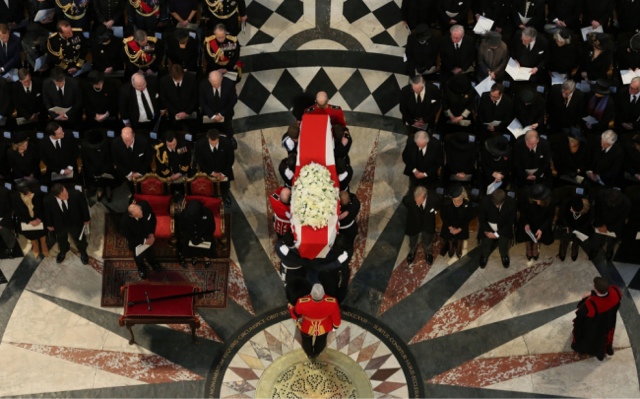
Margaret Thatcher

Thatcher was that rare politician whose persona and influence crossed national borders. Such as her belief in "ordered liberty" was a root principle argued in the Cold War conflict, and her faith in the "vigorous virtues" provided the most fitting materiel to prosecute that clash.

I seem to remember a left wing 'oh so clever' poster, based on Gone with the Wind, which denigrated Reagan and Thatcher for standing up to the USSR over missile bases and disarmament. Clever but typically wrong headed. Instead of instigating WW3 we won the cold war, broke down the Berlin Wall, the iron curtain, destroyed communism and liberated the whole of eastern Europe, and various Soviet republics, all without firing a shot.

She did this with the support of the Conservative party and opposed by the socialists and the wet liberals.
And to think there are some who say her funeral is not worth the money.

Whatever the domestic squabbles, there are many millions of people who appreciate her role in their current liberty. Almost a decade ago at another funeral, across the Atlantic, she spoke appreciatively of "the great liberator" being mourned, who'd helped bring on those peoples' liberty. Today, one can eulogize Thatcher with those same words.

Friday, 22 March 2013

A bit of Korean History by LegalCerebral Reporter

 
America invaded the Koreans in 1888 and they killed 1000′s consequently the Americans had to retreat due to increasing resistance from the Korean military. That was 1888. Of course, the main stream media and history books have conveniently deleted these facts. Korea was divided preciously due to American interference. Every Korean opposed the idea of division, so Americans started the civil war with the Russians and the classic democracy vs communism charade to conquer a land. American troops killed 30% of the Korean population during the Korean War. During WW2 the level of loss suffered by UK was 0.86 % and Germany 1% of the population. North Korea was the place for resistance from the American invasion of Korea. The Americans bombed every place out in North Korea. You never heard about the massacre in Jeju Island, where the people protesting against the occupation of American troops in Korea, were butchered by the 1000s. Based on their past experiences North Korea has every reason to be prepared for future, they are arming themselves to the teeth for another invasion. 

Picture from http://blogs.denverpost.com/opinion/2013/03/08/cartoons-of-the-day-dennis-rodman-in-north-korea/35102/4/

Thursday, 31 January 2013

For the Benefit of Mali- or the Glory of France? by James W Monroe

Unnoticed by many, the civil war in Mali has raged for the last few years between nationalist Tauregs and Islamic militant supporters against the democratic government. The rebels upped the ante since 2007 when they took over the north, helped by unrest and weapons from surrounding nations.

At the recent crisis point (at time of writing 16 January 2013) when the city of Konna was captured, the French launched a very bold, aggressive and assertive ground war. Despite having international diplomatic support (unlike some previous Western military ventures), this action is independent of a UN decision or a NATO task force. Although there are other African armies arriving to assist in the fighting, to all extents and purposes the French are going it alone in Mali. This is a marked contrast to previous military campaigns; hopefully a rapid unilateral action will be more effective than past joint operations.

Tuesday, 22 January 2013

Succession to the Crown Bill "Clegg knows best"

The doubtful and petulant man-child Clegg transforms the majesty and responsibility of constitution and government to the status of third rate company board meetings with temper tantrums if he doesn't get his own way. The legacy bequeathed to the nation is being trashed by this incontinent meddling in pursuit of a "Clegg knows best" philosophy. Clegg is a greater hazard to this country than any malevolent non-extraditable cleric. This is playing with the 1688 Settlement caused by James II trying to reintroduce Roman Catholicism after Charles II gingerly tried to restore the Stuart Monarchy in 1660 and Re-Establish The Church of England and House of Lords. The Act of Union with Scotland 1704 is predicated on the 1701 Act of Settlement. Playing with the basis of the Constitution and the basis of Great Britain is a bizarre act in times like these. The political class seems obsessed with undoing the ties that bind.

Monday, 24 December 2012

Building for the future or building on the future? by Ian Tattersall


I can think of no better way of introducing this article than the quotation, “the beauty of our landscape; the particular cultures and traditions that rural life sustains, these are national treasures, to be cherished and protected for everyone’s benefit. It is not enough for politicians to say that – we need leaders who really understand it and feel it in their bones”. In light of these words from the Prime Minister, it seems surprising that David Cameron is advocating a planning system where the default answer is yes. Most alarming of these proposals is the threat to the greenbelt.

Currently covering around 6000 square miles of the country, the benefits of the greenbelt are clear; it constitutes a protective barrier preventing expansion of the town into the countryside, known as urban sprawl. If this threat is not enough, the reasons for it are even more problematic.

The first reason claimed is that weaker planning restrictions will lead to improved economic performance in the construction sector. After the catastrophic global economic crisis, where a lack of regulation led to free rein, the so-called “cutting of the red tape” cannot be a good thing. This is evidenced by the countries with the weakest planning control (Greece, Italy, Spain and Ireland) all being hit the hardest by the crisis. Surely this shows that deregulation is not appropriate.

The second reason claimed is that housing demand requires relaxation of planning laws. However, at the time of writing, there are 740,000 empty homes and 400,000 plots already with planning permission in the UK. There is also enough brownfield land to build over 1,000,000 homes. The reason why houses are not being built is not a planning system where 80% of housing proposals are approved; it is the economic conditions. These are of severely restricted credit, householders finding themselves cash-strapped and a lack of confidence and demand. To put it simply, until the economic position picks up, building will not.

The knee jerk reaction by the Government to increase economic performance and satisfy housing demand achieves neither. Instead it threatens the countryside like never before. Just as alarming, it shows a complete failure of the Government to understand the reasons for the lack of building and economic problems. As the Government announces this week that it has not met deficit targets, it is further evidence that they are clueless as how to solve the economic situation in this country.

Ian Tattersall
Law Student 
BPP University College

Great Expectations by James W Monroe


Iraq- Iran- North Korea- and now Syria. The same pattern emerges: a ‘rogue state’ with a madman dictator ruling a repressive, brutal regime. Add human rights abuses, suspicions (founded or not) of WMD, and the regime posing a potential genuine threat to the West. The West shows genuine, deep, moral and political outrage, with impassioned speeches at the UN and similar bodies. Sweeping economic and political sanctions follow, as well as ‘pariah state’ status for the nation in question, in a diplomatic response evocative of Abyssinian and appeasement in the 1930’s.

The story changed, however, with Syria. Mediation efforts have been, to an extent, successful, and, upon evidence of potential use of chemical weapons against Syrians, President Obama gave his stern warning that ‘there would be consequences’ if President Assad used chemical weapons against his own people. Such a warning was echoed By William Hague: ‘[Obama] warned of serious consequences and he means it’. While such a stance is admirable, it is regretfully unlikely to be backed up by strong action by either Obama facing up to the Republicans over the fiscal cliff of US debt, or the Conservative front bench dealing with the political fallout from the Autumn Statement and the Leveson report- another inevitability.

Many commentators predicted the main recommendation of the report (statutory regulation underpinned by statute). Cameron’s total endorsement of Leveson in one sentence, but not backing the key recommendation in another, was similarly predictable of Coalition politics. Subsequent actions, such as productive meetings with senior media officials, drafting legislation and starting to devise a new regulatory body are also a hallmark of the Coalition; definite forward progress with one hand, but the other hand giving nothing definitive, swift and far reaching (but once again, admittedly matters are a lot more complicated, making such affirmative action hard to implement). However, with such strong cross party consensus in Parliament, the media anxious to put things right, and a groundswell of public support, the hope is there that mechanisms can be put in place to prevent another comparative phone hacking episode.

Both internationally and domestically, the same old stories emerge, PG Wodehouse style. The difference for both Syrians being killed in Damascus and the victims of phone hacking is that this time there is the potential for a different outcome, turning a Wodehouse story into an unpredictable Saki story (without the dry humour).

James W Monroe
Law Student
BPP University College

Friday, 7 December 2012

The dereliction of the Justice and Security Bill

http://www.guardian.co.uk/law/2012/sep/25/secret-courts-the-essential-guide
Why after hundreds of years does British law need to be so radically changed to the detriment of its citizens, could it be in the last few decades the citizens have become so criminalised,disloyal or just so lacking in empathy to the state that it needs these powers to keep the residents of these Isles in check or is it that the importing of so many people of disparate cultures that it needs these powers to keep the peace.  What a lot of the immigrants over the last few decades should reflect on is, did you really come here to end up with laws somewhat harsher than the ones you left behind, or are you the cause because you could not leave the venal parts of your culture or religion behind.

  • Monday, 10 September 2012

    It is an immense honor to announce that this year the award for courageousness is being presented by Judge Bowers

    Theft, defined by section 9 of the Theft Act 1968 creates two variant offences: First variant, a person is guilty of burglary if he enters any building or part of a building as a trespasser with intent to steal, inflict GBH or do unlawful damage to the building or anything in it. Second variant, a person is guilty of burglary if, having entered a building or part of a building as a trespasser, he steals or attempts to steal anything in the building, or inflicts or attempts to inflict grievous bodily harm on any person in the building. If section 9 of the said act lays the law down, rather uncharacteristically of English law, so plainly and simply how is it that a so called “experienced” judge made such a disregardful decision. Judge Bowers is, with his praise for the burglar inviting the temptation of other burglars to run boisterously. Let us wait until this, to use Judge Bowers words, courageous burglar burgles his home and then revisit the situation.

    Wednesday, 29 August 2012

    TAXMAN & ROBIN

    Nick Clegg comes back from holiday having had time to think and formulate ideas as to how to lead this country into more financial misery. GET THE RICH, the people who through endeavor and hard work have made themselves and their families well off; get them to pay for the fumbling incompetence of our politicians, to pay for their gaffs and their overspending. Clegg should go out into the commercial world with his handler, trying to build and run a company of his own and see

    Friday, 6 July 2012

    The Libdems are rotten swines

    It was agreed that these w#####s would support boundary changes in exchange for the ill advised AV referenda, if they renege on this they will show themselves not worthy of any trust in the future. So this is yet further proof, if needed, that one can never trust the Liberal Democrats. The reduction in the number of Parliamentary seats is anti-democratic anyway so losing that AND Clegg's self-serving HoL abomination is no more than getting rid of two bad wrongs against the electorate for the price of one! It is important to understand the consequences to both the constitution and the electorate if the reforms go ahead. A large proportion of the Lords will be democratically elected, consequently the quality of the candidates will fluctuate; the non elected 20% will just go around licking the asses of the elected 80%. Most importantly chage will not come about as quickly as it does now as having two elected chambers will inevitably lead to a constant tussle between the two houses over whether a bill should be passed or not. If the House Of Lords was independent of political interference I doubt we would have had dumped on us the raft of self-serving constitutional gerrymandering by the three establishment political parties that we have suffered since 1990. Certainly Clegg would not even dream on trying to foist this latest piece of self-serving garbage on thew nation!

    Thursday, 5 July 2012

    The unelected minority deciding for the elected majority

    Should a country’s elected legislature decide who can enter a country or reside in that country or an unelected group of priest-like judges who alone can divine right and wrong?
    If you accept the concept of nationality then you must accept it has privileges, one of the most fundamental being the right to live in the state whose nationality you hold. By that measure you have no right to live in a state where you don’t hold nationality and your residence must be subject to whether it is in the interests of the citizens of that state (Utilitarian).
    We have allowed treaties to empower unelected foreign judges to override national legislatures in this area and need to think about what we understand the roles of national legislatures and foreign judiciaries should be in a democracy.

    Friday, 29 June 2012

    Blairs attempt to re-enter politics

    In a nation drowning in apathy and selfishness, thieves and pimps will prosper. This effeminate man has made millions from destroying our country, subverting our institutions, sending our young men and women to their deaths and deliberately flooding us with immigrants to ensure that Britishness is destroyed forever. He has ensured that his family will enjoy massive wealth, an elite lifestyle and protection for generations, while the rest of us struggle to survive in a country he left in ruins. With faux sincerity and glistening eyes raised heavenwards, he swans around the world courted by presidents, kings and superstars preaching to them all what they should and shouldn't do. And still the greed is not satisfied. If this man has the sheer gall to bid for elder statesmanship - and the British people do not have the principle and passion to stand against him, then we deserve the destruction we voted for.

    Wednesday, 27 June 2012

    The ludicrous nature of the House of Lords reforms

    The ludicrous nature of the House of Lords reforms is highlighted by the position of the bilious Lord Oakeshott. Twice he stood for election and wisely on both occasions the voters rejected him. The LibDems responded by circumventing democracy and raising him to the peerage. As I understand it, the new proposals will ensure that the voters are kept well away from decisions that might result in Oakeshott losing his cosy unelected sinecure. The electorate will only be allowed to vote for a Party. Decisions on which of their friends, relations and benefactors will sit in the Lords will be taken by anonymous men doing deals in locked rooms. It won't be a reform. It will be a recipe for corruption.